

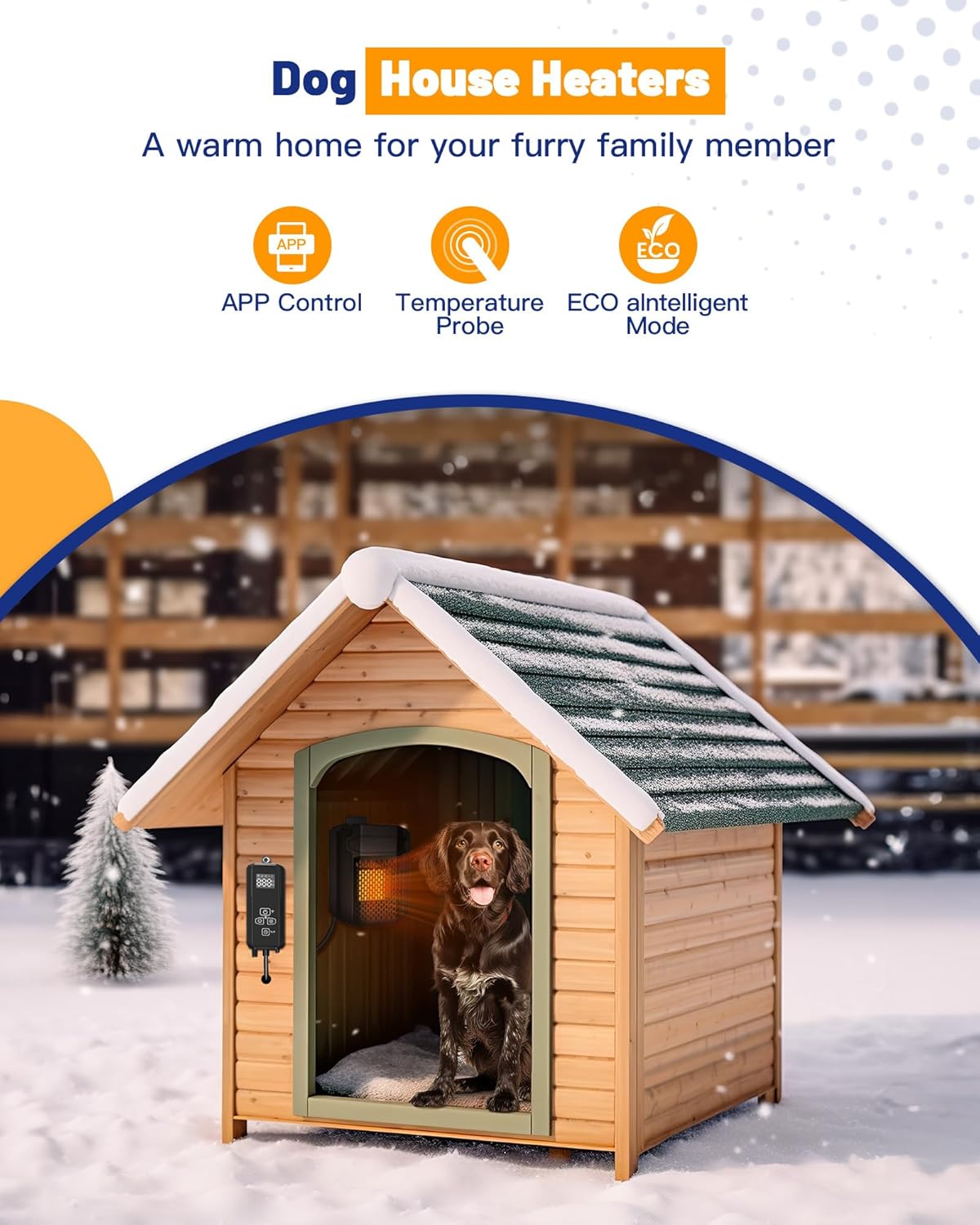
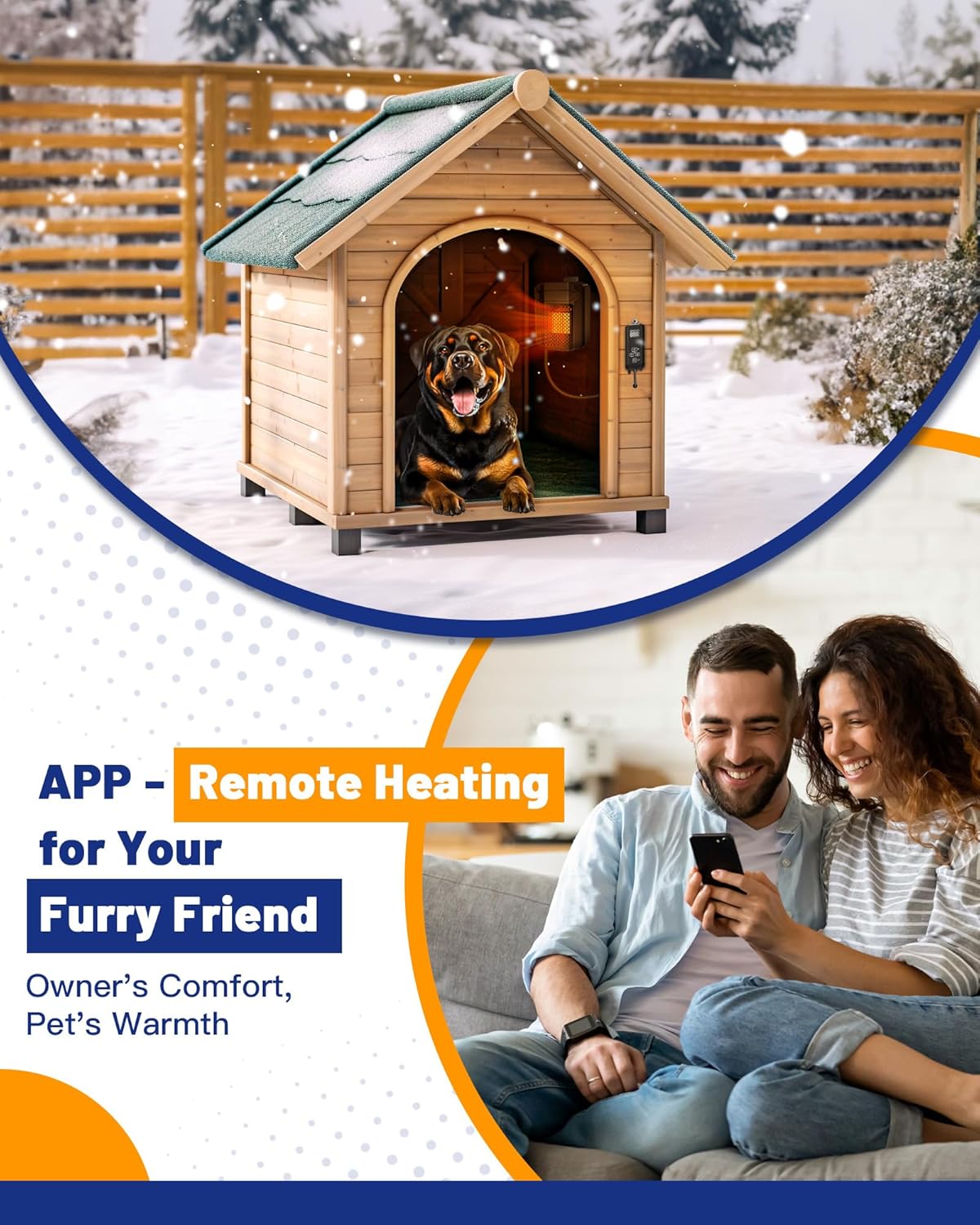
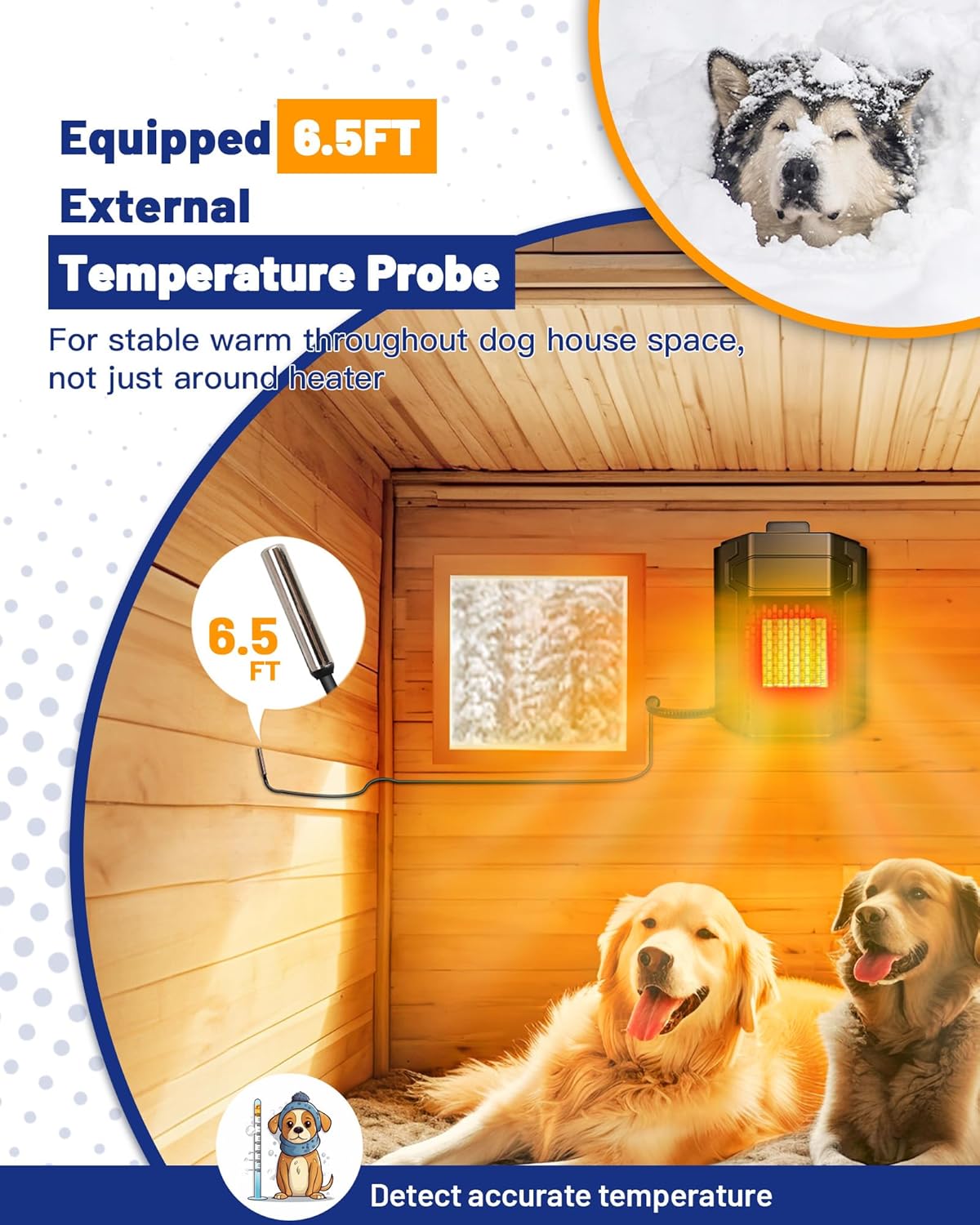
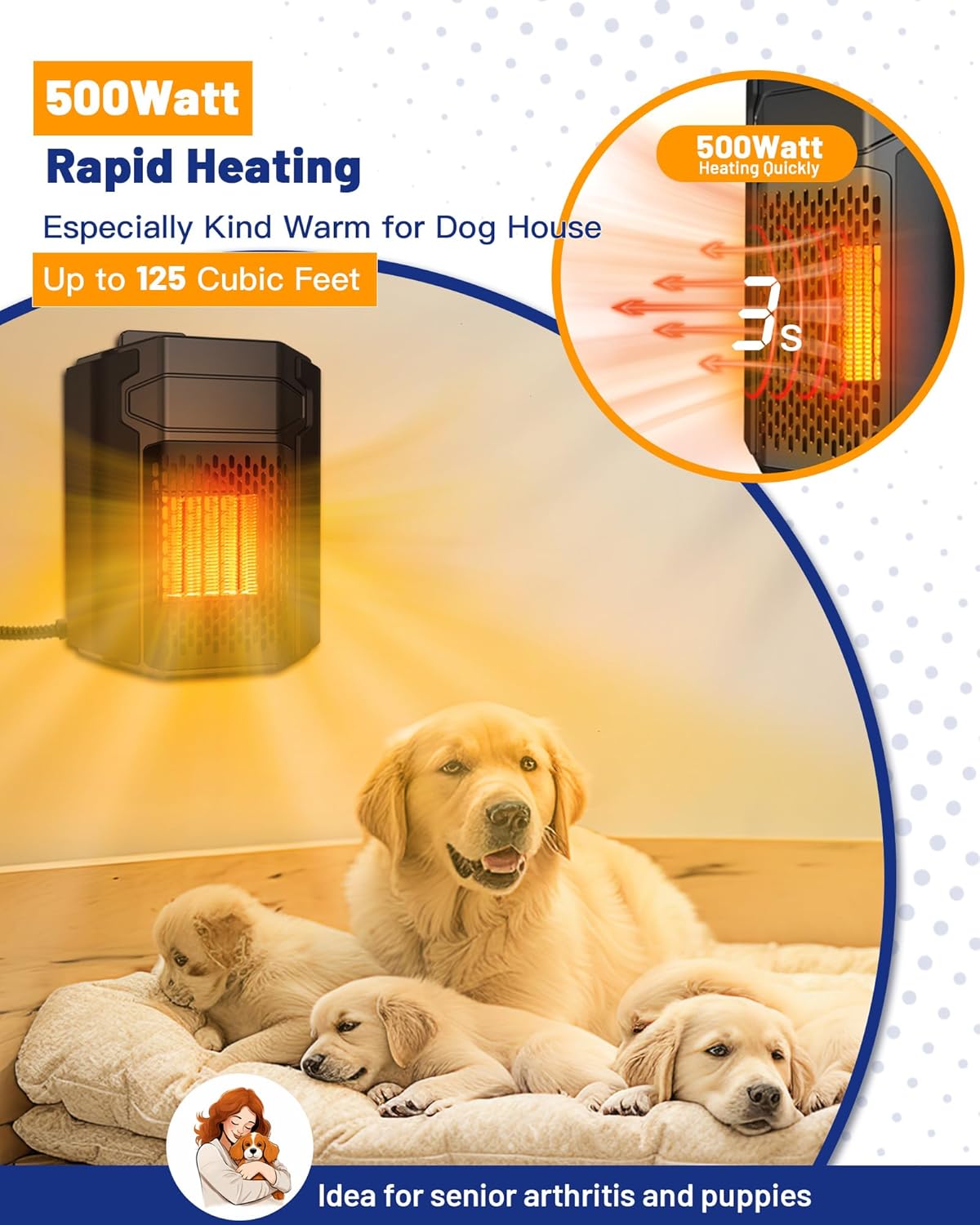
Measure the shelter where your pet actually rests
The external temperature probe can be positioned away from the heater body, helping the thermostat respond to conditions in the occupied area of a sheltered dog house, cat shelter, chicken coop or rabbit hutch.
Why probe placement matters
A sensor next to the heater may read warmer than the animal's resting area. Place the external probe at a representative height and location, away from the warm-air outlet, cold drafts, bedding and direct contact with the animal. Recheck the reading after any shelter or bedding change.
What Amazon feedback tells us to address
Among ten visible reviews sampled from the mapped Amazon page, positive feedback focuses on useful heat, remote adjustment and straightforward installation. Negative feedback raises startup errors, power-restoration behavior, app dependence, and pets reaching the probe or cord. These mixed reports are installation and support priorities, not guarantees about every unit.
Frequently asked questions
What WiFi network does D2303 require?
D2303 connects through a 2.4 GHz WiFi network. It does not connect directly to a 5 GHz-only network. A dual-band router can be used when its 2.4 GHz network is enabled.
Where should I place the external probe?
Place it near the pet's resting zone but out of reach, away from the heater outlet, door drafts and bedding. Do not let the probe touch the heater or a cold exterior wall.
Is the probe cable chew-proof?
No. Route and shield the probe cable so the animal cannot reach it. Inspect it regularly and stop using the heater if any cable is damaged.
What should I do after a power or WiFi interruption?
Check the controller and app, confirm the target temperature and schedule, and observe a complete heating cycle before leaving the unit unattended.
How large a space will it heat?
Actual performance depends on insulation, outdoor temperature, air leakage, shelter volume and installation. Choose by your measured shelter conditions rather than an unverified maximum-volume claim.

